
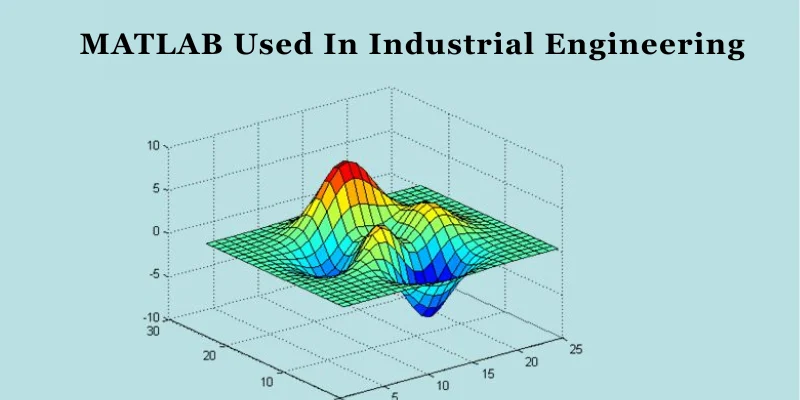
MATLAB is a high-level programming language and interactive environment developed by MathWorks. It’s widely used for numerical computation, data visualisation, algorithm development, and more. MATLAB provides engineers with built-in functions and toolboxes tailored for various disciplines, including control systems, signal processing, machine learning, and industrial engineering applications. Our MATLAB Training in Chennai provides comprehensive instruction along with placement support and career guidance to help you succeed in the field.
Applications of MATLAB in Industrial Engineering
1. Optimisation of Processes
Industrial engineers often focus on improving the efficiency of processes and systems. MATLAB’s Optimisation Toolbox helps in solving complex linear, nonlinear, and integer optimisation problems.
- Engineers can model supply chain networks to minimise costs.
- Optimisation algorithms facilitate resource allocation, scheduling, and production planning.
- MATLAB enables the simulation of real-world constraints, allowing for more accurate decision-making.
2. Simulation and Modelling
Simulation is at the heart of industrial engineering. MATLAB enables engineers to create dynamic models to test processes without disrupting actual operations.
- Use of Simulink (a MATLAB-based simulation tool) for modelling systems, manufacturing workflows or automation processes. Enroll in our Primavera Training in Chennai to master project scheduling, resource planning, and get placement support from industry experts.
- Engineers simulate system behaviour under different conditions to identify potential issues and solutions.
- Effective in designing control systems for robotics, logistics, or assembly lines.
3. Data Analysis and Visualisation
Data-driven decision-making is key in industrial engineering. MATLAB excels at handling large datasets and transforming them into actionable insights.
- Analyze production data to detect trends, inefficiencies, and defects. Learn how MATLAB supports Wireless Satellite Design for advanced simulation and modelling tasks.
- Use built-in plotting functions to visualise process performance over time.
- Integrate with Excel, SQL databases, and IoT systems for real-time analytics.
4. Quality Control and Six Sigma
Quality management is a core area in industrial engineering. MATLAB facilitates the implementation of statistical tools for quality control and process improvement.
- Perform statistical process control (SPC) using control charts and hypothesis testing. Gain essential data analysis skills by joining our Oracle Training in Chennai, which offers both online and offline classes along with placement assistance.
- Implement Six Sigma techniques, such as DMAIC (Define, Measure, Analyse, Improve, Control).
- MATLAB facilitates the design of experiments (DOE) to enhance product quality and minimise variability.
5. Supply Chain and Logistics
Efficient supply chain management is essential for reducing costs and improving service levels. MATLAB supports the modelling and simulation of supply chain components.
- Optimise logistics networks and transportation planning.
- Forecast demand using time-series data.
- Use algorithms to minimise inventory costs and enhance delivery reliability.
6. Automation and Robotics
With the rise of Industry 4.0, automation has become essential. MATLAB supports the design, testing, and implementation of automation systems.
- Control design for robots and automated guided vehicles (AGVs).
- Model sensors and actuators to integrate with industrial equipment.
- Combine with PLC programming for factory automation solutions.
Our Best Training Institute in Chennai offers a wide range of courses designed to help you gain in-depth knowledge and advance your career.
Benefits of Using MATLAB in Industrial Engineering
- Efficiency: Speeds up problem-solving with pre-built toolboxes and functions.
- Flexibility: Allows easy modifications and prototyping of models.
- Accuracy: Offers reliable numerical methods for precise calculations.
- Integration: Supports integration with other software, CAD, Excel, Python, and cloud platforms.
- Visualisation: Helps in interpreting complex data through charts and interactive dashboards.
MATLAB in Education and Industry
MATLAB is not only used in industries but also extensively in academic institutions for teaching and research.
- Universities offer MATLAB-based labs to prepare students for real-world challenges. Also read: Features and Advantages of MATLAB for academic and industry use.
- Industrial internships often require knowledge of MATLAB for tasks like data analysis, simulation, and optimisation.
- Companies in manufacturing, automotive, logistics, and aerospace sectors rely on MATLAB for engineering projects.
MATLAB plays a vital role in industrial engineering by providing powerful tools for simulation, optimisation, data analysis, and system modelling. Whether it’s improving manufacturing processes, enhancing quality control, or optimising supply chains, MATLAB helps engineers make data-driven, efficient decisions.