
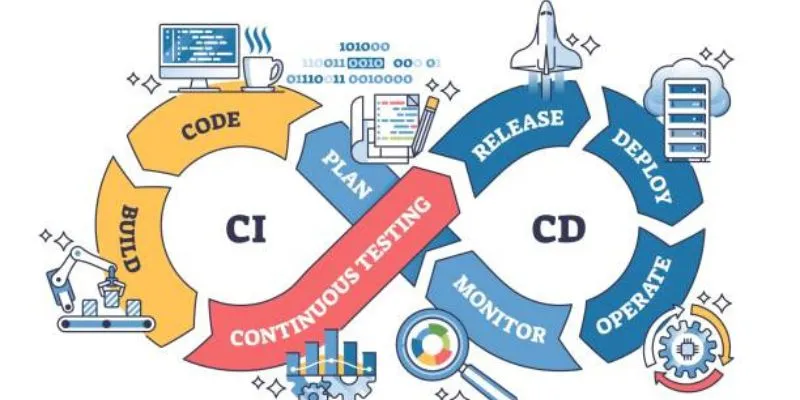
As full-stack developers take on increasingly complex projects, the need for smooth, automated deployment becomes more critical. CI/CD, Continuous Integration and Continuous or Delivery Deployment pipelines offer a solution by streamlining the development process, reducing manual errors, and accelerating release cycles. GitHub Actions has emerged as a powerful, developer-friendly tool to implement CI/CD workflows with ease, especially for full-stack applications. If you’re looking to build real-world skills in this area, enrolling in a Full Stack Developer Course in Trivandrum at FITA Academy can give you hands-on training in tools like GitHub Actions, along with comprehensive coverage of both front-end and back-end technologies.
Why CI/CD Matters for Full-Stack Development
Full-stack apps involve both front-end and back-end codebases, often integrated with databases, APIs, and third-party services. Managing changes across all layers of the stack without a reliable pipeline can lead to version mismatches, broken features, or long deployment times.
CI/CD pipelines address these issues by automating testing, building, and deploying whenever code is pushed to a repository. This not only speeds up development but also improves collaboration among team members by keeping the project stable and up to date.
What is GitHub Actions?
GitHub Actions is a feature built into GitHub that lets you automate workflows directly from your repository. It uses YAML configuration files to define actions that run when certain events occur, such as pushing code, opening pull requests, or tagging a release.
For full-stack projects, GitHub Actions can automate steps like linting, running tests, bundling front-end assets, starting back-end services, and deploying to cloud platforms.
CI/CD Workflow for a Full-Stack App
A typical CI/CD pipeline for a full-stack app includes several key stages. The process usually starts with detecting changes to the codebase. When developers push new code, GitHub Actions can run a sequence of steps to verify and deploy the update.
First, automated tests are executed for both the front-end and back-end. These may include unit tests, integration tests, and API validation. If all tests pass, the pipeline proceeds to the build stage, where front-end assets are compiled and the server code is packaged for deployment.
Next, the deployment stage takes over. Depending on your setup, this could involve sending files to a remote server, deploying to a cloud service like Vercel or Heroku, or updating a container on a Kubernetes cluster.
Advantages of Using GitHub Actions
One of the biggest benefits of GitHub Actions is that it is deeply integrated with your existing GitHub workflow. You don’t need to rely on third-party tools or switch platforms. It also provides a generous free tier for public repositories and a scalable pricing model for private ones. To gain practical experience with tools like this and build a solid foundation in modern web development, consider joining a Full Stack Developer Course in Kochi, where you can learn through guided projects and expert-led training.
Another advantage is the flexibility it offers. Developers can run workflows on different operating systems, set custom environment variables, and define job dependencies. This is especially useful for full-stack projects that involve various services and configurations.
Best Practices for Full-Stack CI/CD Pipelines
To make the most of GitHub Actions in a full-stack environment, consider keeping your workflows modular. Split front-end and back-end jobs when possible, so that one failure does not block unrelated processes. Also, use secrets to store sensitive information like API keys and access tokens securely. GitHub allows encrypted storage of these secrets, which can then be referenced in your workflows without exposing them in your code.
Another tip is to run your tests in parallel to speed up the feedback loop. This helps identify problems faster and minimizes delays in your deployment process.
CI/CD pipelines are no longer a luxury but a necessity for full-stack developers looking to deliver reliable and scalable applications. GitHub Actions provides an accessible and powerful way to automate these pipelines, right from your code repository. By integrating testing, building, and deployment into a smooth workflow, you can focus more on writing code and less on managing infrastructure.
Adopting GitHub Actions for your full-stack projects is not just about efficiency. It’s about building a development process that supports rapid growth, consistent delivery, and high-quality applications. If you’re aiming to master these skills from the ground up, enrolling in a Full Stack Course in Pune can equip you with the practical skills and real-world experience essential for success in the field.
Also check: What is Event-Driven Architecture in Back-End Development?